18 Challenges of geostatistical methods
Download slides PDF
The PDF contains what was shown during the lecture. Some of these websites include additional text in light gray.
18.1 Geostatistical data analysis today
Spatial data analysis - examples
Binary responses – Landslide occurrence
Data used in computer practical of chapter 24.
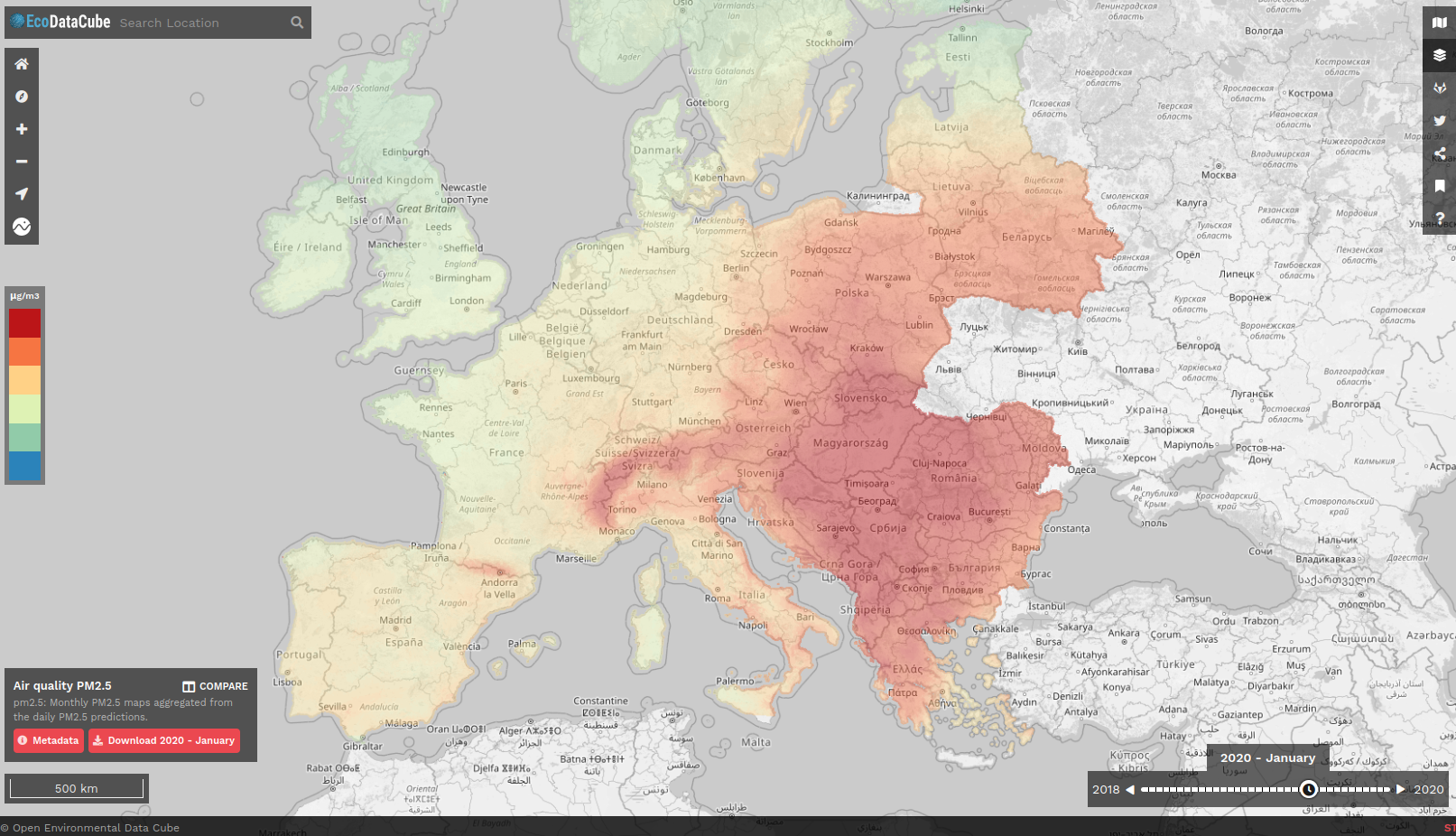
European wide air pollution mapping
Feature engineering - algorithms
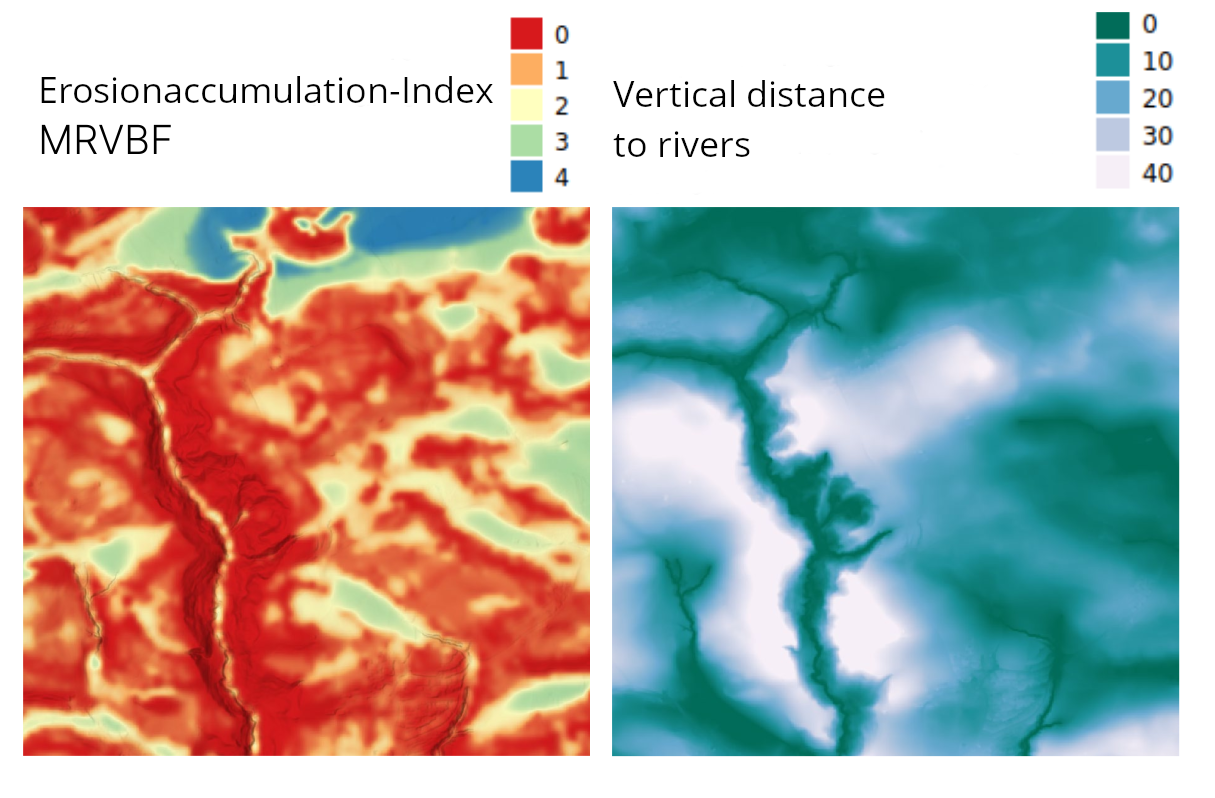
Feature engineering - settings
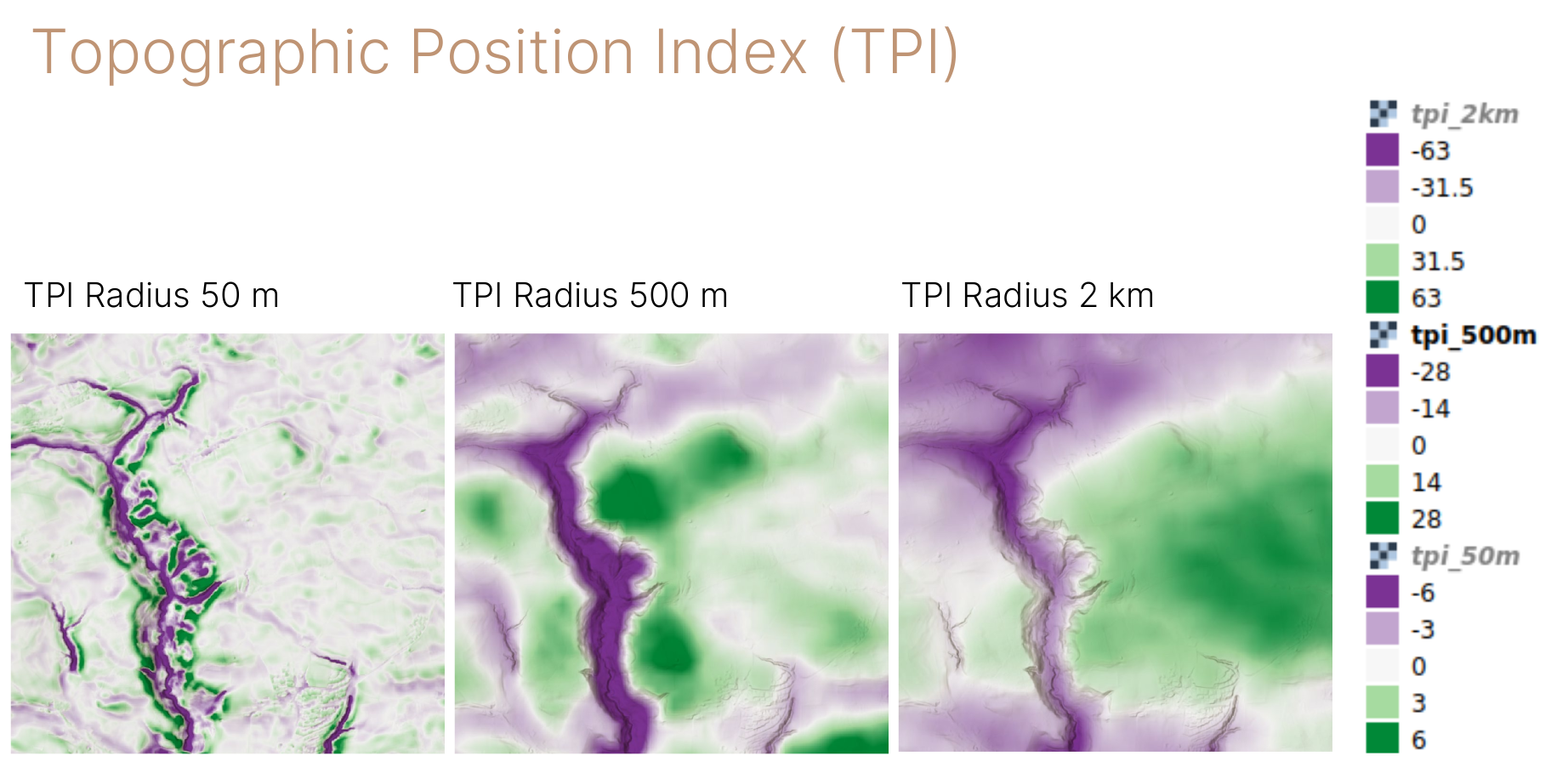
These are now just derivatives from one data set (elevation model). We could also have different datasets, and not be sure which is best to include. An example is meteorological data, where often different versions exist (e.g. average yearly rainfall over different periods, computed by different models or based on a different set of rainfall stations).
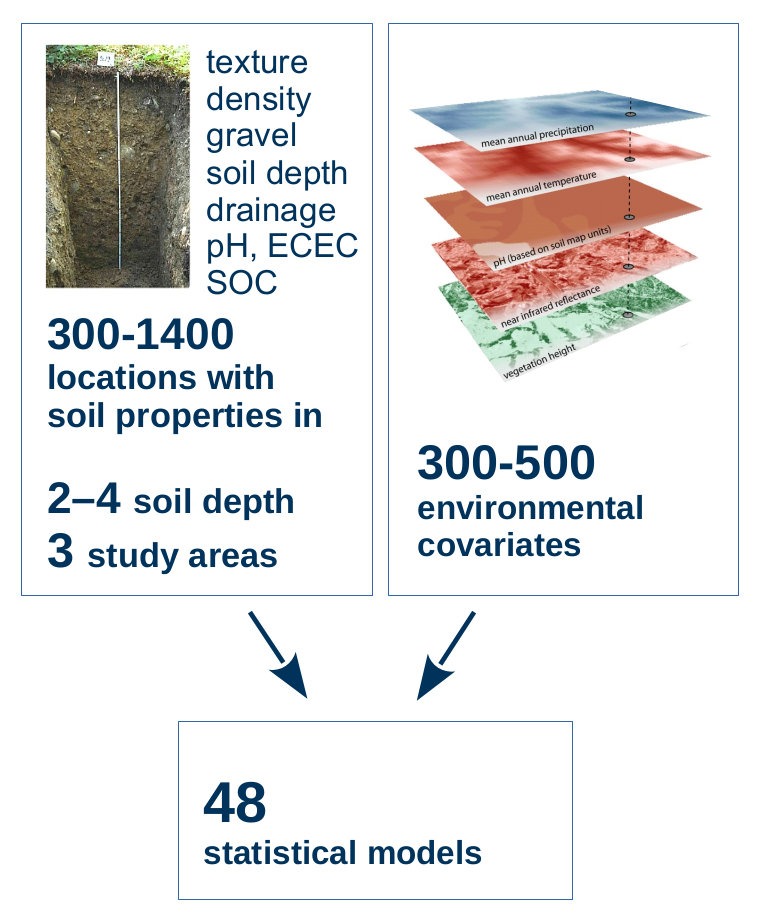
Multi-attribute soil mapping
18.2 Challenges for classical geostatistics
- What “properties” does a spatial prediction method need to have to handle today’s spatial data problems?
- What are the challenges with classical geostatistical approaches regarding these “properties”?
Answers
Today’s requirements for a method
Deal with …
large number of responses,
responses of any data type (binary, nominal, ordered, continuous),
non-Gaussian continuous responses,
large numbers of covariates,
increasing number of data points,
mapping for huge surfaces for many prediction nodes (e.g. high-resolution global mapping),
non-Gaussian uncertainty distributions of predictions.
We need …
automatic selection of relevant covariates,
automatic building of model structure,
relaxed model assumptions regarding residual distribution,
good performance to fit the model with large numbers of observations,
good performance to predict for large numbers of nodes,
non-parametric uncertainty quantification.
Problems with kriging approaches
Assumption on Gaussian residual distribution and stationarity
Manual modelling steps like residual analysis
Model selection for trend very challenging for large number of covariates
Very sensitive to multi-collinear covariates
Slow model fitting for large number of points
Slow prediction for large number of prediction locations